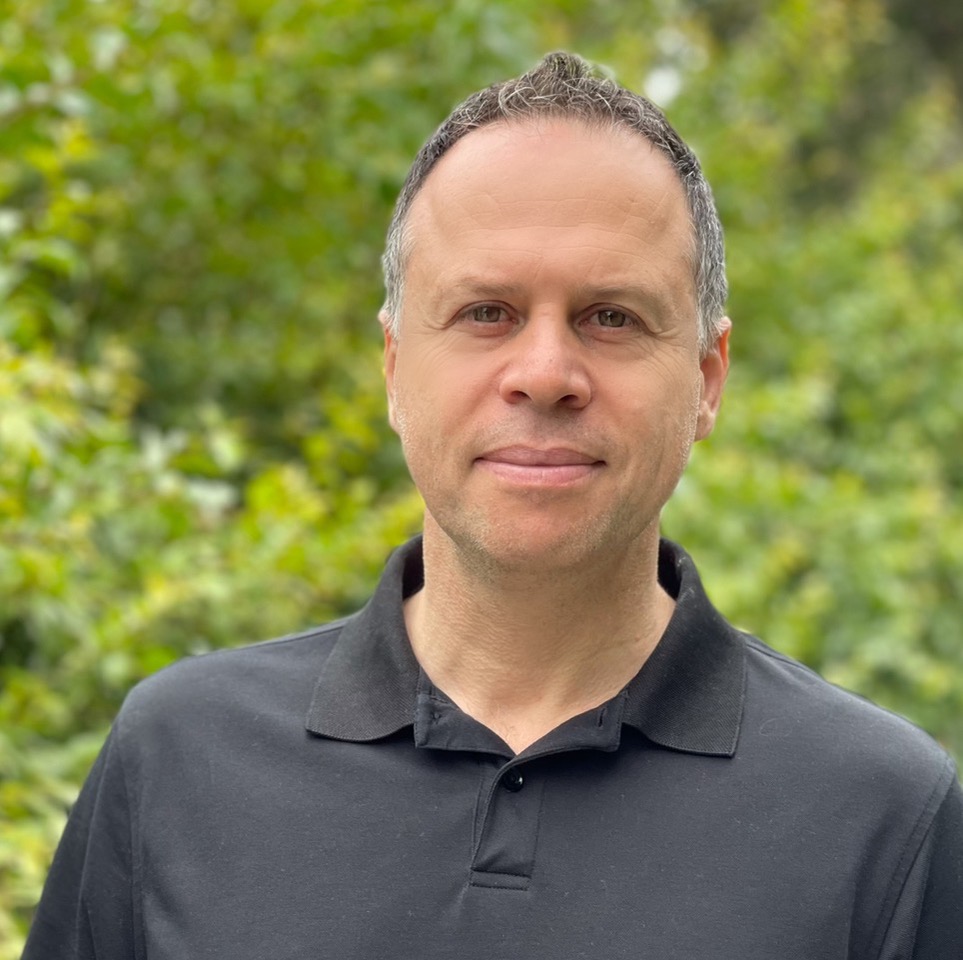
Babak Shahbaba, Professor of Statistics at UC Irvine, will be speaking about "Meta Fusion: A Unified Framework For Multimodal Fusion with Adaptive Mutual Learning" on Wednesday February 4, 2026 at 3:30pm in HSSB 1173.
Title:
Meta Fusion: A Unified Framework For Multimodal Fusion with Adaptive Mutual Learning
Abstract:
Developing effective multimodal data fusion strategies has become increasingly important for enhancing the predictive power of statistical machine learning methods across a wide range of applications, from autonomous driving to medical diagnosis. Traditional fusion methods, including early, intermediate, and late fusion, integrate data at different stages, each offering distinct advantages and limitations. In this talk, we discuss Meta Fusion, a flexible and principled framework that unifies these existing strategies as special cases. Motivated by deep mutual learning and ensemble learning, Meta Fusion constructs a cohort of models based on various combinations of latent representations across modalities, and further boosts predictive performance through "soft information sharing" within the cohort. Our approach is model-agnostic in learning the latent representations, allowing it to flexibly adapt to the unique characteristics of each modality. Theoretically, our soft information sharing mechanism reduces the generalization error. Empirically, Meta Fusion consistently outperforms conventional fusion strategies in extensive simulation studies. We further validate our approach on real-world applications, including Alzheimer's disease detection and neural decoding.
Bio:
Babak Shahbaba is a Professor of Statistics at UC Irvine and a Fellow of the American Statistical Association. Before joining UC Irvine, he was a Postdoctoral Fellow at Stanford University and received his PhD from the University of Toronto under the supervision of Radford Neal. Shahbaba’s research focuses on Bayesian inference and statistical machine learning, with applications to data-intensive biomedical problems. His work spans a broad range of areas, including statistical methodologies (e.g., Bayesian nonparametrics, stochastic process modeling, data integration, and deep learning), computational techniques (e.g., scalable MCMC), and a variety of applied and collaborative projects in neuroscience, genomics, and the health sciences.