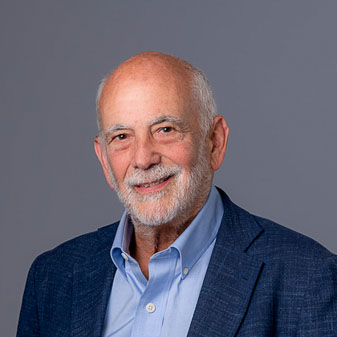
Peter Neuwrith FSA, FCA will be discussing about "“Decumulation and Home Equity Conversion Mortgages (HECM’s)” on Wednesday, April 29th, 2026 from 3:30 - 4:30pm in HSSB 1173.
Abstract:
Retirees face a daunting challenge when seeking to utilize their accumulated assets to
generate a sustainable level of income throughout their retirement while maintaining
sufficient resources to absorb unforeseen contingent expenses that might arise at any time
during their remaining lifetime. This challenge is known as “the decumulation problem”
and it has been characterized by William Sharpe as “the hardest, nastiest problem in
finance”.
Historically, the decumulation problem was considered a branch of finance, economics
and/or investment theory, but in recent years, it has been recognized by the actuarial
profession as essentially one of risk management. Beginning in 2017, actuaries have made
significant contributions towards understanding the range of possible solutions, both with
respect to decumulation theory and developing practical real world approaches to assist
prospective retirees in addressing the problem. Recent research has gone a long way in
identifying separate and distinct categories of risk that are unique to decumulation and in
identifying risk mitigation techniques that are proving successful in practice. In this seminar we will review the contributions of the two actuaries (Steve Vernon FSA and Ken Steiner FSA) who have each done groundbreaking work in this area, and then discuss the somewhat different approach that Pete Neuwirth FSA FCA and Barry Sacks PhD JD have
taken to the problem – utilizing HECMs, a relatively new asset class, as a “buffer asset” to
mitigate some of the risks inherent in decumulation (e.g. Sequence of Returns risk and
Longevity risk). Forthcoming research by Neuwirth and Sacks focuses on utilizing a HECM to mitigate
Spike Expense, and this research will be discussed, as well as some of the open questions
that remain and represent opportunities for others to make further progress in determining
optimal retirement income strategies for retirees in varying circumstances.
Bio:
Actuary and Author Pete Neuwirth, FSA, FCA is a thought leader specializing in retirement plan design, decumulation strategies, and financial wellness. A 1979 graduate of Harvard College with a B.A. in Mathematics and Linguistics, Pete began his career at Connecticut General Life Insurance (now CIGNA) and spent nearly four decades in actuarial consulting.
Throughout his career, Pete has held senior leadership roles at many of the industry’s leading firms—including Aon, Hewitt Associates, Watson Wyatt, Towers Perrin, and Towers Watson—as well as Chief Actuary at Godwins and Principal at Coates Kenney. He also spent a year with Price Waterhouse, rounding out his broad experience across the benefits and financial consulting spectrum.
Since retiring from Towers Watson in 2016, Pete has focused on writing, research, and advising on the “decumulation problem”—how retirees can most effectively convert assets into sustainable income. As founder and partner of Neuwirth Associates Consulting, he provides independent, objective analysis and strategic advice to advisors and high-net-worth individuals, with a particular emphasis on the role of home equity in retirement income planning. Pete is also recognized for his deep expertise in evaluating complex and non-traditional annuity and insurance structures, including hybrid, variable, and indexed products, and how these instruments can be integrated into holistic financial strategies.
Pete has taught graduate seminars in actuarial science at the University of California, Santa Barbara, and continues to publish research in professional journals and online publications. He is the author of Money Mountaineering: Use the Principles of Holistic Financial Wellness to Thrive in a Complex World and What’s Your Future Worth? Using Present Value to Make Better Decisions.
Pete is a Fellow of both the Society of Actuaries and the Conference of Consulting Actuaries and is a frequent speaker at actuarial and financial industry conferences.